Book Appointment Now
7 Critical Signs of Hearing Loss You Must Not Ignore
Hearing loss often develops so gradually that many people don’t realise anything has changed until it begins to affect daily life. Research shows that early signs are subtle and easy to overlook, which is why so many people delay seeking help. According to the RNID, common early symptoms include turning the TV up louder, struggling to follow conversations, and feeling that others are mumbling. The NHS also notes that hearing loss can cause fatigue, stress, and difficulty keeping up with conversations, especially in noisy places.
Recognising the early signs is essential because timely action can prevent further deterioration and improve your long‑term hearing health. For people in Dungannon, Cookstown, and Omagh, understanding these symptoms is especially important, as untreated hearing loss can affect communication, confidence, and quality of life.
What Hearing Loss Really Looks Like Day‑to‑Day
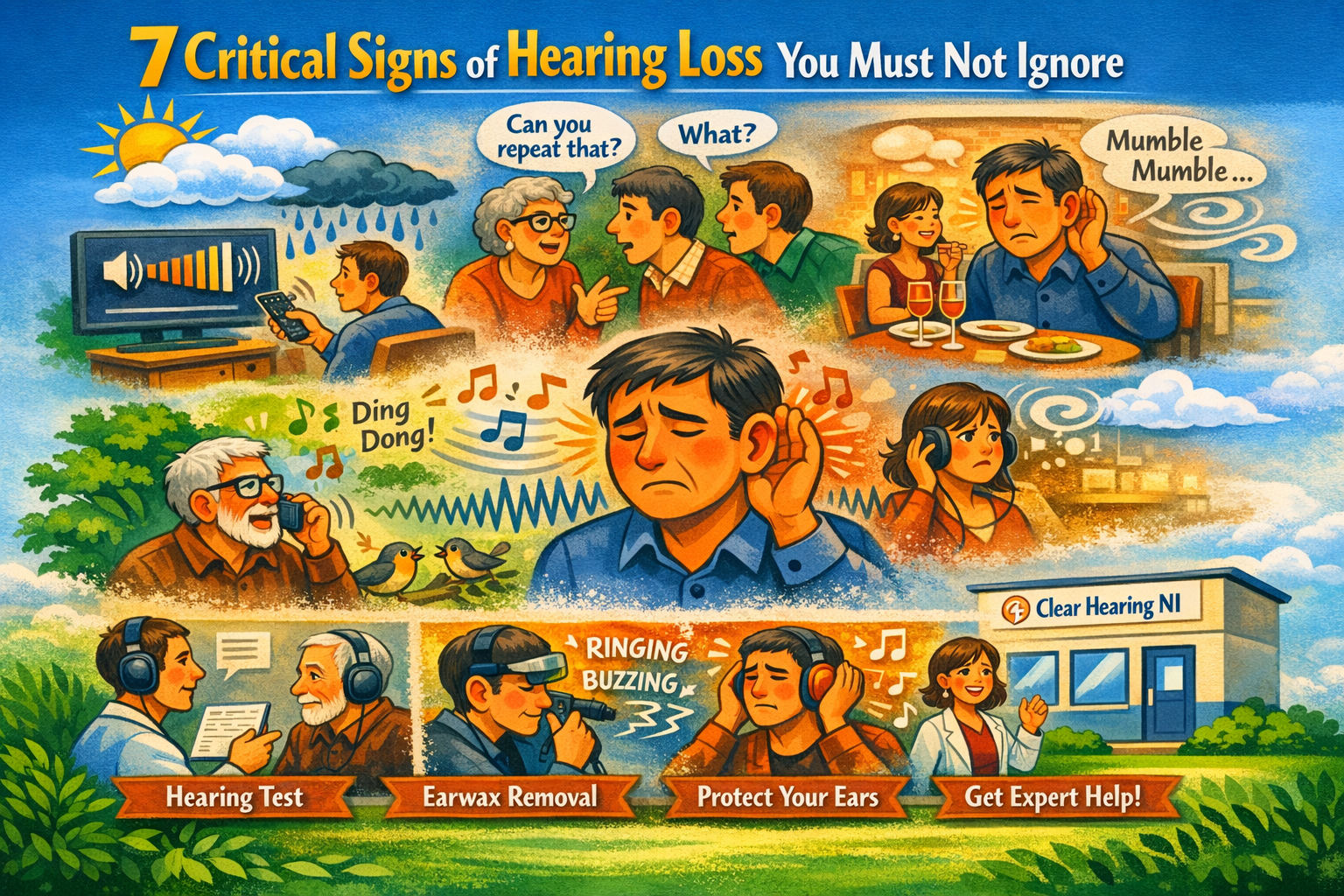
1. You’re Turning the TV Up Higher Than Others Prefer
One of the most common early signs is gradually increasing the TV volume. Many people blame the programme or the actors, but audiologists note that this is often due to reduced clarity rather than loudness. If family members frequently comment on the volume, it’s worth paying attention.
2. You Often Ask People to Repeat Themselves
If you find yourself saying “Sorry, what was that?” more often, especially in small groups, this is a classic early indicator. People with emerging hearing loss often adjust their behaviour without realising it, compensating for missed words or unclear speech.
3. Conversations in Noisy Places Feel Exhausting
Restaurants, cafés, and busy social settings can become overwhelming. The NHS highlights that difficulty hearing in noisy environments is one of the most common symptoms of hearing loss. You may feel mentally drained after conversations because of the extra effort required to listen.
4. You Struggle to Hear High‑Pitched Sounds
Doorbells, alarms, children’s voices, and birdsong are often the first sounds to fade. RNID research found that many people with undiagnosed hearing loss struggle to hear subtle environmental sounds like leaves rustling or rainfall.
5. You Feel Like People Are Mumbling
If voices sound unclear, even when someone is speaking directly to you, this may indicate reduced clarity in the higher frequencies. Audiologists note that this is one of the earliest and most overlooked symptoms.
6. You Avoid Phone Calls or Social Situations
Withdrawing from conversations, avoiding phone calls, or feeling anxious about social interactions can be linked to hearing loss. Many people don’t realise that the emotional and social impact often appears before they consciously recognise the physical symptoms.
7. You Experience Ringing, Buzzing, or Hissing (Tinnitus)
Tinnitus is frequently associated with hearing loss. RNID notes that ringing or whooshing sounds in the ears can be an early warning sign and should not be ignored, especially if persistent.
Why These Signs Matter More Than You Think
Hearing loss doesn’t just affect your ears; it affects your brain, relationships, and wellbeing. Research shows that hearing loss can contribute to social isolation and cognitive strain, and while it is not proven to directly cause dementia, the two conditions often occur together. Early detection helps reduce stress, improve communication, and maintain cognitive health.
For people in Northern Ireland, especially in rural areas like Dungannon, Cookstown, and Omagh, untreated hearing loss can also affect work, driving safety, and daily communication with family.
What Causes These Early Symptoms?
Hearing loss can develop for many reasons, including:
• Age‑related changes
• Noise exposure (workplaces, concerts, headphones)
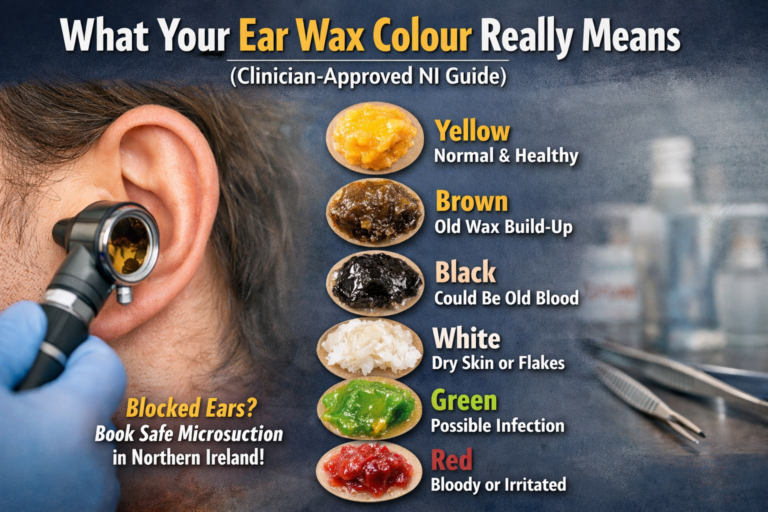
• Earwax build‑up
• Ear infections
• Genetics
• Medical conditions such as diabetes or high blood pressure
The NHS notes that earwax build‑up, infections, and age‑related decline are among the most common causes, and many are treatable when identified early.
What You Should Do Next
Book a Hearing Test
A hearing test is the only way to confirm hearing loss. RNID recommends using their free online hearing check as a first step, followed by a full assessment with an audiologist if needed.
Get Your Ears Examined for Wax Build‑Up
Earwax is a common and easily treatable cause of hearing loss. If you live in Dungannon, Cookstown, or Omagh, Clear Hearing NI provides safe, gentle microsuction earwax removal.
Seek Professional Advice Promptly
If you experience sudden hearing loss, the NHS advises seeking urgent medical attention, as early treatment can be critical for recovery.
Consider Lifestyle Adjustments
Small changes can help protect your hearing:
• Reduce exposure to loud noise
• Use hearing protection when needed
• Take breaks from headphones
• Manage underlying health conditions
These steps won’t reverse hearing loss, but they can prevent further decline.
Local Support for Hearing Loss in Northern Ireland
People in Tyrone often delay seeking help, assuming hearing loss is “just ageing.” But early action makes a significant difference. Whether you’re in Dungannon, Cookstown, or Omagh, local support is available.
Clear Hearing NI offers:
• Earwax removal
• Hearing checks
• Guidance on next steps