Book Appointment Now
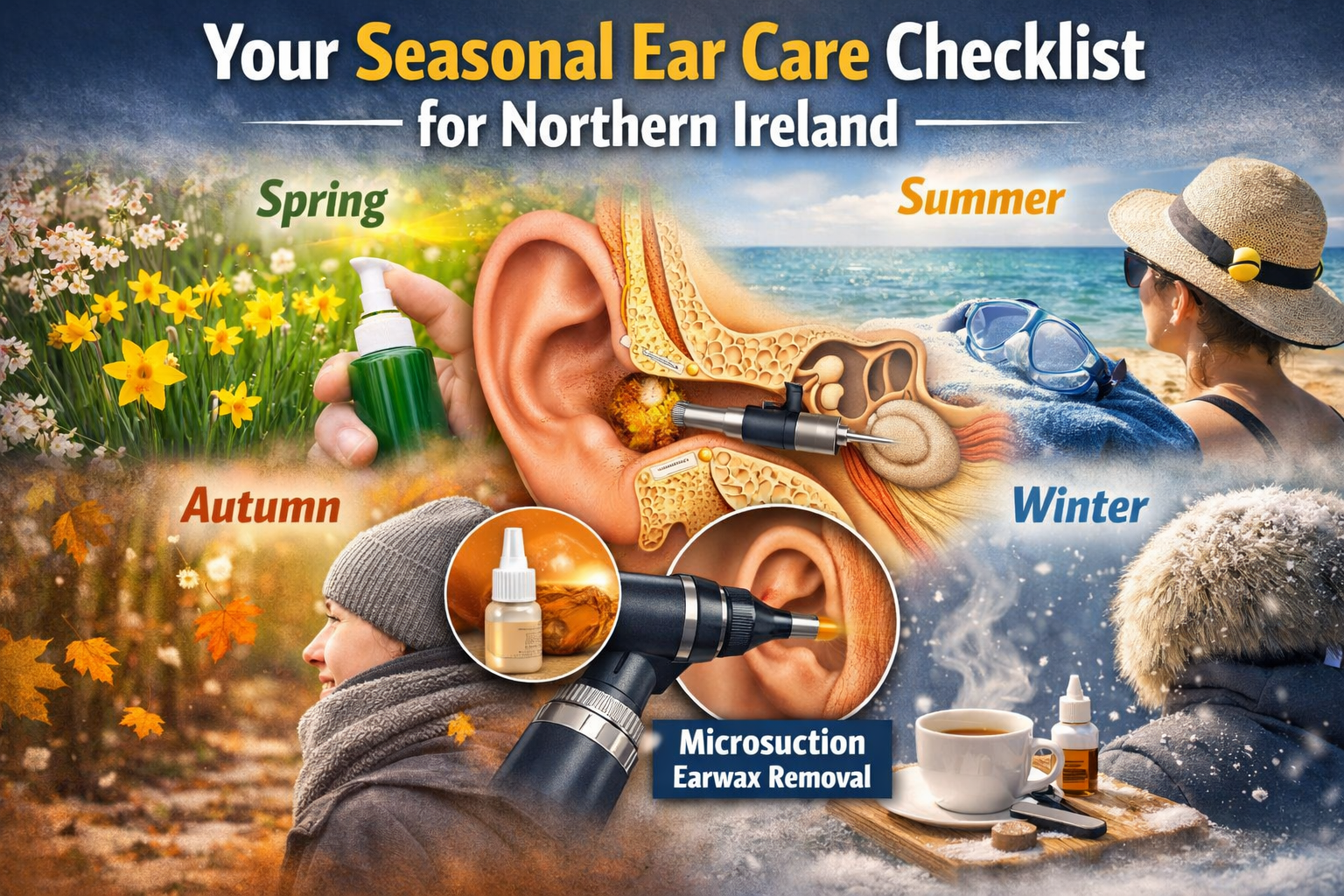
7 Essential Steps: Your Seasonal Ear Care Checklist for Northern Ireland (Clinician‑Approved Guide)
Northern Ireland’s weather is famously unpredictable, with bright sunshine one hour, rain and wind the next. According to the Met Office, NI regularly experiences rapid shifts in temperature, humidity, and pressure throughout the year, including breezy spells, patchy rain, and fluctuating overnight frost risk. These environmental changes have a direct impact on your ears, from wax production to pressure regulation and infection risk.
This seasonal ear care checklist for Northern Ireland is designed to help you protect your hearing all year round. It blends clinical best practice, NI‑specific climate patterns, and local expectations around safe ear care, including when to seek professional microsuction from a regulated provider.
Spring — Managing Allergies, Moisture & Wax Build‑Up
Spring in Northern Ireland brings rising pollen levels, fluctuating humidity, and more time outdoors. These factors can increase wax production and irritate the Eustachian tubes, leading to pressure, popping, or muffled hearing.
Your Spring Ear Care Checklist
- Keep pollen exposure low on high‑count days
- Use olive oil drops if the wax feels dry or itchy
- Avoid cotton buds; they push wax deeper
- Book microsuction if you experience blockage or reduced hearing
Spring is also peak time for allergy‑related ear pressure. Managing hay fever early can significantly reduce ear symptoms.
Summer — Protecting Against Water, Heat & Infection
Northern Ireland may not have Mediterranean summers, but warmer days and increased swimming still raise the risk of otitis externa (swimmer’s ear). Warm, moist environments encourage bacterial and fungal growth.
Your Summer Ear Care Checklist
- Dry your ears thoroughly after swimming or showering
- Avoid inserting anything into the ear canal
- Use earplugs if you’re prone to infections
- Watch for itchiness, discharge, or pain as early signs of infection
If symptoms persist, NHS guidance recommends seeking assessment for possible infection.
Autumn — Preparing for Damp Weather & Pressure Changes
Autumn in NI often brings increased rainfall, cooler temperatures, and more wind. These conditions can trigger Eustachian tube dysfunction, especially in people with sinus issues.
Your Autumn Ear Care Checklist
- Keep your ears warm in windy conditions
- Treat sinus congestion early
- Monitor for muffled hearing or popping
- Schedule a seasonal ear check if you’re prone to wax build‑up
Autumn is an ideal time to book a preventative microsuction appointment before winter colds arrive.
Winter — Protecting Against Colds, Flu & Blocked Ears
Winter is the toughest season for ear health in Northern Ireland. Cold air, indoor heating, and viral infections can all increase the risk of blocked ears, ear infections, and pressure problems.
Your Winter Ear Care Checklist
- Keep your ears warm outdoors
- Stay hydrated to reduce congestion
- Avoid ear candling, it is unsafe and ineffective
- Book microsuction if you experience a sudden blockage
NHS guidance highlights that ear infections often follow colds and can cause pain, fever, and discharge.
Year‑Round Ear Care — What Every NI Resident Should Know
Regardless of the season, some ear care principles remain constant.
Daily & Weekly Habits
- Clean only the outer ear with a cloth
- Avoid cotton buds, hairpins, or ear candles
- Protect your ears from loud noise
- Monitor for changes in hearing, tinnitus, or pressure
The Cleveland Clinic emphasises that cotton buds can injure the ear canal and push wax deeper, increasing the risk of blockage.
When to Book Earwax Removal in Northern Ireland
Because GP surgeries across NI no longer routinely offer earwax removal, many people now rely on private clinicians. Microsuction is the safest, most precise method and is recommended by ENT specialists.
You should book an appointment if you experience:
- Muffled or reduced hearing
- A blocked or full sensation
- Tinnitus that worsens with wax
- Recurrent wax every 3–6 months
- Discomfort when wearing hearing aids
Internal reference: Clear Hearing NI Earwax Removal Service https://kerribfarm.co.uk/earwax-removal-faq/
NI‑Specific Regulations & Expectations
Ear care providers in Northern Ireland must follow:
- RQIA standards for infection control and clinical safety
- NICE ghttps://www.nice.org.uk/guidanceuidance for earwax management (CG60)
- Best‑practice protocols for microsuction and otoscopy
These frameworks ensure safe, regulated care, especially important during seasonal peaks in ear problems.
Final Thoughts — Seasonal Ear Care Is a Year‑Round Priority
Northern Ireland’s climate is unique, and so are its ear‑care challenges. From spring allergies to winter infections, each season brings its own risks. By following this seasonal ear care checklist, you can protect your hearing, reduce discomfort, and stay ahead of seasonal changes.
If you’re unsure whether your symptoms are seasonal or something more serious, a quick microsuction appointment with a qualified NI clinician can give you clarity and peace of mind.