Book Appointment Now
7 Surprising Insights: What Your Ear Wax Colour Really Means (Clinician‑Approved NI Guide)
Ear wax is one of the most misunderstood parts of ear health. In Northern Ireland, where GP surgeries no longer routinely offer ear wax removal, more people than ever are turning to private clinicians for answers about blocked ears, unusual wax colours, and changes in hearing. One of the most common questions we hear is simple but important: “What does my ear wax colour mean?”
The truth is that ear wax colour can reveal a lot about your ear health, from normal variations to signs that you may need professional microsuction. This clinician‑approved guide breaks down the most common colours, what they indicate, and when to seek help from a qualified ear‑care specialist in NI.
Before diving in, remember: ear wax is normal, protective, and essential. It traps dust, moisturises the ear canal, and prevents infection. Problems arise only when wax becomes impacted, infected, or changes in a way that signals something deeper.
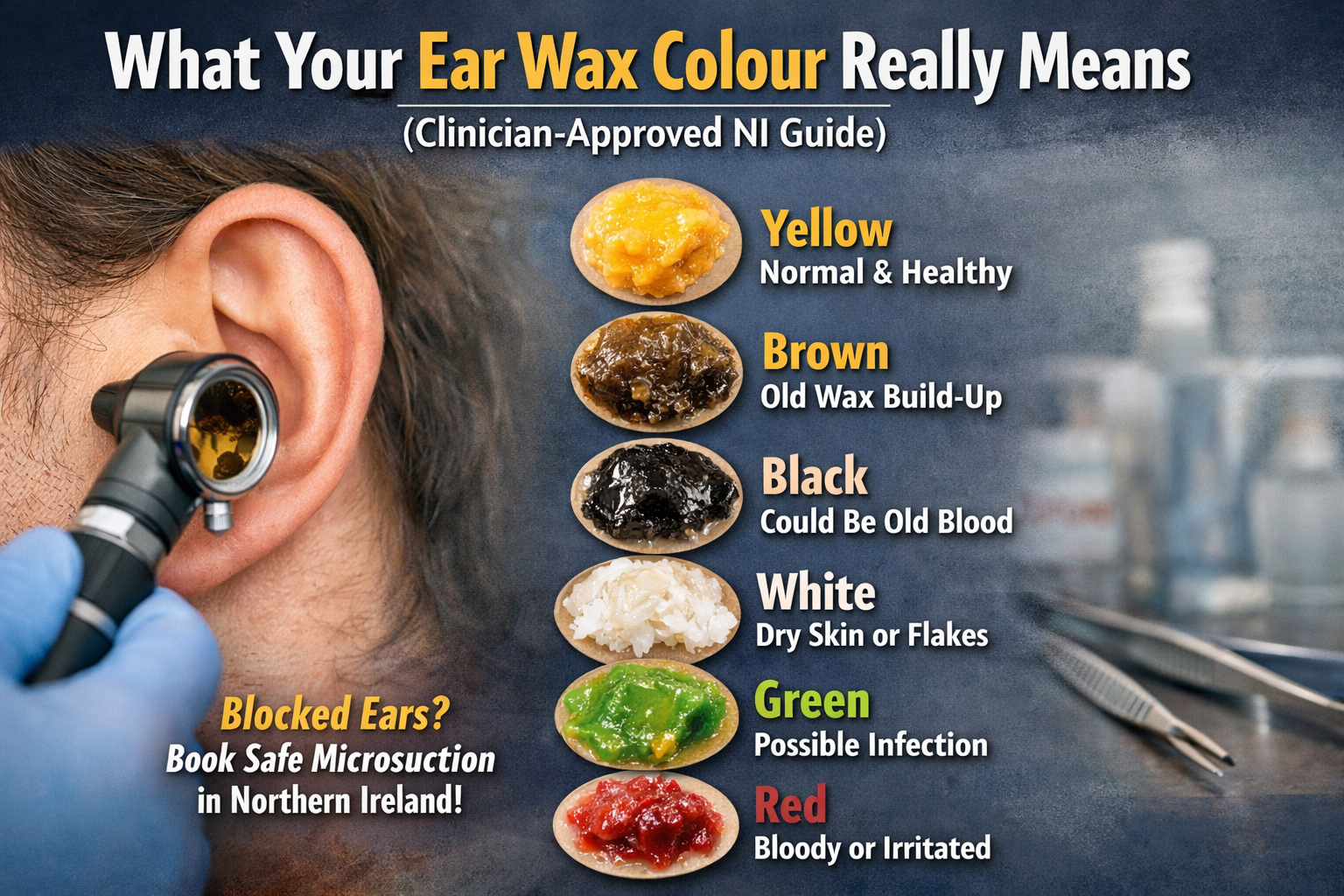
1. A Yellow Ear Wax Colour— The Most Common and Healthy Colour
Yellow ear wax is the colour most people recognise. It’s soft, sticky, and completely normal. In fact, it’s a sign that your ears are doing exactly what they should.
Why Yellow Wax Is Healthy
Yellow wax indicates a balanced mix of oils, skin cells, and natural secretions. It’s especially common in younger adults and tends to be softer and easier to remove naturally.
If you’re experiencing muffled hearing, pressure, or blocked ears despite having yellow wax, the issue is usually impaction, not infection. In Northern Ireland, the safest way to clear this is microsuction, which is recommended by the NHS and widely used by private clinicians.
2. An Orange Ear Wax Colour— A Sign of Fresh, Active Wax Production
Orange wax is simply fresh yellow wax that hasn’t dried yet. It’s common in people who produce wax more quickly, including older adults and those with narrow ear canals.
When Orange Wax Becomes a Problem
If you notice a sudden increase in orange wax, especially alongside itching or discomfort, it may indicate irritation or mild inflammation. In NI, clinicians often see this in people who use cotton buds, hearing aids, or earphones regularly.
Avoid inserting anything into the ear canal; it pushes wax deeper and increases the risk of infection.
3. A Brown Ear Wax Colour— Older, Drier, and Often Completely Normal
Brown wax is simply older wax that has oxidised. It’s darker because it has been in the ear longer and has trapped more debris.
When Dark Brown Wax Needs Attention
If the wax is very dark, thick, or sticky, it may indicate a long‑term build‑up. This is especially common in Northern Ireland’s older population, where age‑related changes reduce the ear’s natural self‑cleaning ability.
Symptoms to watch for include:
- Persistent muffled hearing
- Pressure or fullness
- Difficulty hearing conversations
- Recurrent wax build‑up every few months
If this sounds familiar, a microsuction appointment is usually the safest solution.
4. A Black Ear Wax Colour— Usually Harmless, Sometimes a Warning Sign
Black ear wax can look alarming, but in many cases, it’s simply very old wax that has dried and darkened over time.
When Black Wax Indicates a Problem
Black wax can occasionally signal:
- Dried blood from a minor scratch
- A past infection
- A foreign body in the ear
- Fungal debris (rare but possible)
If you notice black wax alongside pain, odour, or discharge, book a clinician‑led assessment. In NI, private ear‑care providers follow strict infection‑control standards aligned with RQIA expectations, ensuring safe diagnosis and treatment.
5. A White or Pale Ear Wax Colour— Often Linked to Dry Skin or Genetics
White or pale wax is less common but usually harmless. It’s often seen in people with naturally dry skin, eczema, psoriasis, or those who produce less oil in the ear canal.
When White Wax Needs a Check‑Up
If white wax flakes away easily or is accompanied by itching, it may indicate a mild fungal issue or dermatitis. NI clinicians typically assess this using otoscopy and may recommend moisturising drops or safe microsuction if wax is impacted.
6. A Green Ear Wax Colour— A Possible Sign of Infection
Green wax is one of the few colours that clearly suggests something is wrong. It often indicates bacterial infection, especially if accompanied by odour or pain.
What to Do if You See Green Wax
Do not attempt home removal. In Northern Ireland, clinicians follow NICE guidelines for ear infections, which may involve referral to a GP or ENT if discharge is present. Microsuction may still be used, but only after a proper clinical assessment.
7. A Red or Bloody Ear Wax Colour— Always Worth Investigating
Red or blood‑tinged wax usually means there has been irritation or trauma inside the ear canal. The most common cause in NI is, unsurprisingly, cotton buds.
When Blood in Wax Is Serious
Seek help if you notice:
- Persistent bleeding
- Sharp pain
- Sudden hearing loss
- A history of recent infection
Clinicians in NI are trained to identify whether the bleeding is superficial or linked to a deeper issue, such as a perforated eardrum.
When to Book Ear Wax Removal in Northern Ireland
Regardless of colour, you should book a professional assessment if you experience:
- Muffled or reduced hearing
- A blocked or full sensation
- Tinnitus that worsens with wax build‑up
- Recurrent wax every 3–6 months
- Discomfort when wearing hearing aids
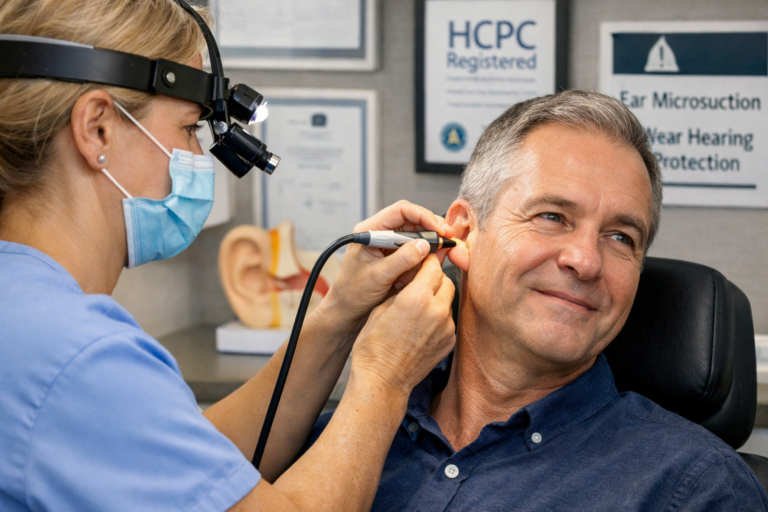
In Northern Ireland, microsuction is considered the safest method and is widely used by private providers because it is:
- Quick
- Safe for perforated eardrums
- Recommended by NHS and ENT specialists
- More precise than irrigation
Book your appointment: Ear Wax Removal Near Me
Final Thoughts — Ear Wax Colour Is a Clue, Not a Diagnosis
Your ear wax colour can tell you a lot about your ear health, but it’s only one piece of the puzzle. If you’re unsure, experiencing symptoms, or simply want peace of mind, a quick microsuction appointment with a qualified clinician in Northern Ireland is the safest way to get clarity.
Ear care in NI is evolving, with more people relying on private providers due to changes in GP services. That makes trusted, regulated, clinician‑led care more important than ever.